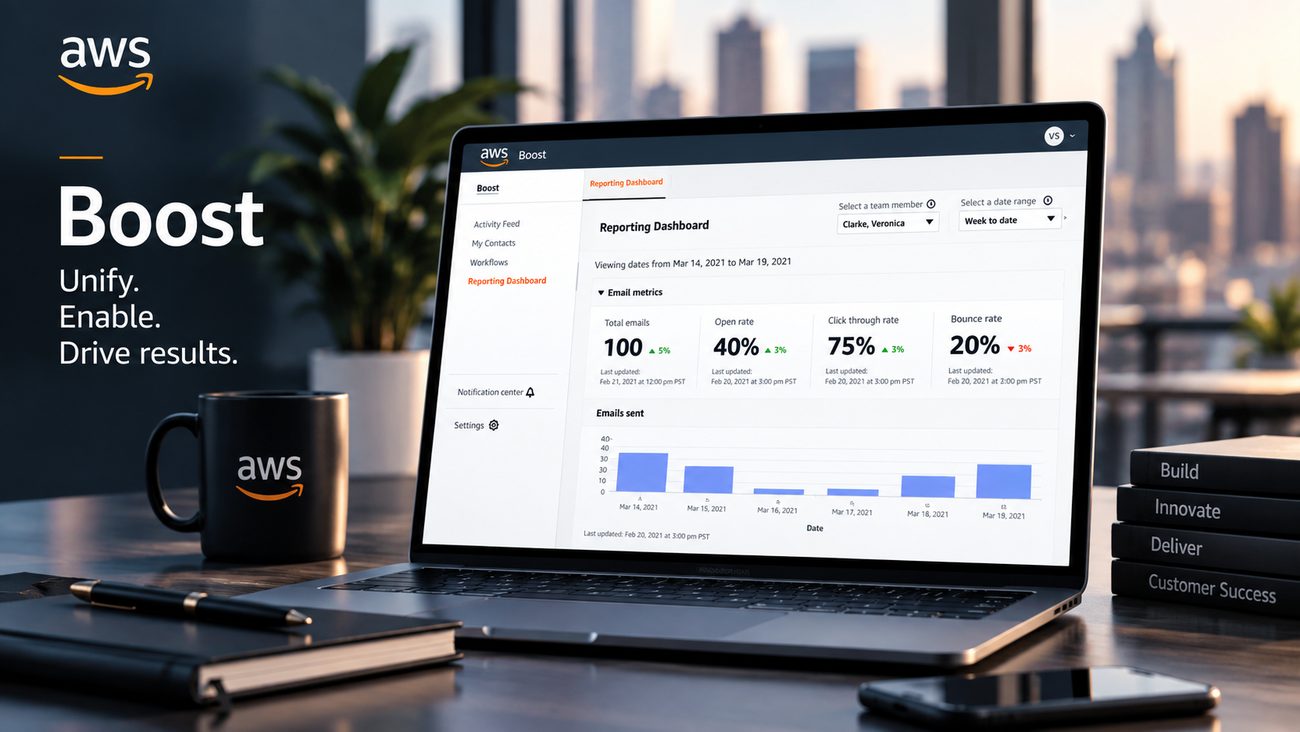
Sales Enablement Platform
Boost
Transforming a fragmented sales ecosystem into one connected experience.
A unified platform to help Program Managers, Sales Reps, and Sales Managers plan, execute, and measure sales plays at scale.
The challenge
Program managers were tracking sales plays manually across multiple tools and spreadsheets, with no automation or visibility. This created inefficiencies, data quality issues, and higher license costs.
Sellers were switching between five to seven tools, including Salesforce and RingCentral, just to do their day-to-day work. The cost was measured in lost time and lost trust in the data.
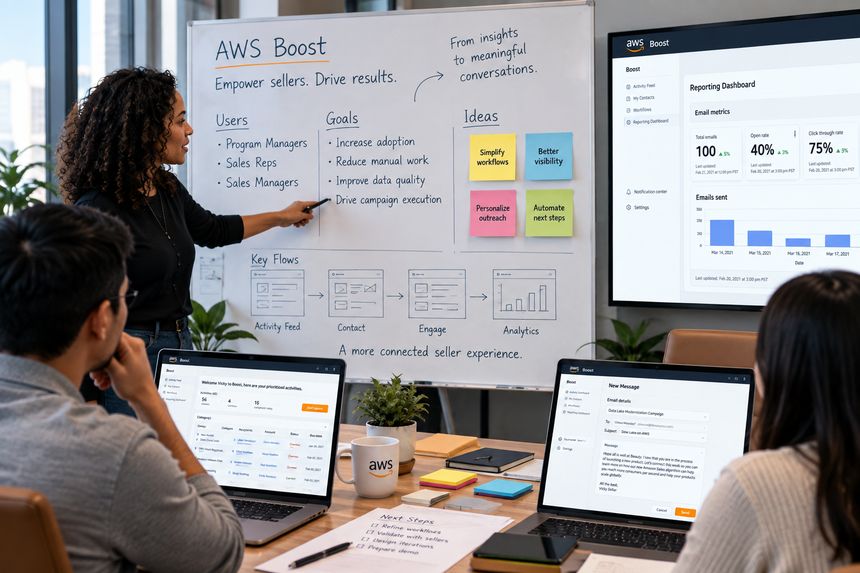
We needed one place to plan, execute, and measure, not five different tools.
Research

I ran discovery across roughly 50 to 100 research sessions with Program Managers, Sales Reps, and Sales Managers to map how work actually moved between people and tools.
That work produced three core personas and a clear picture of where context-switching, manual tracking, and data quality broke down.
Solution
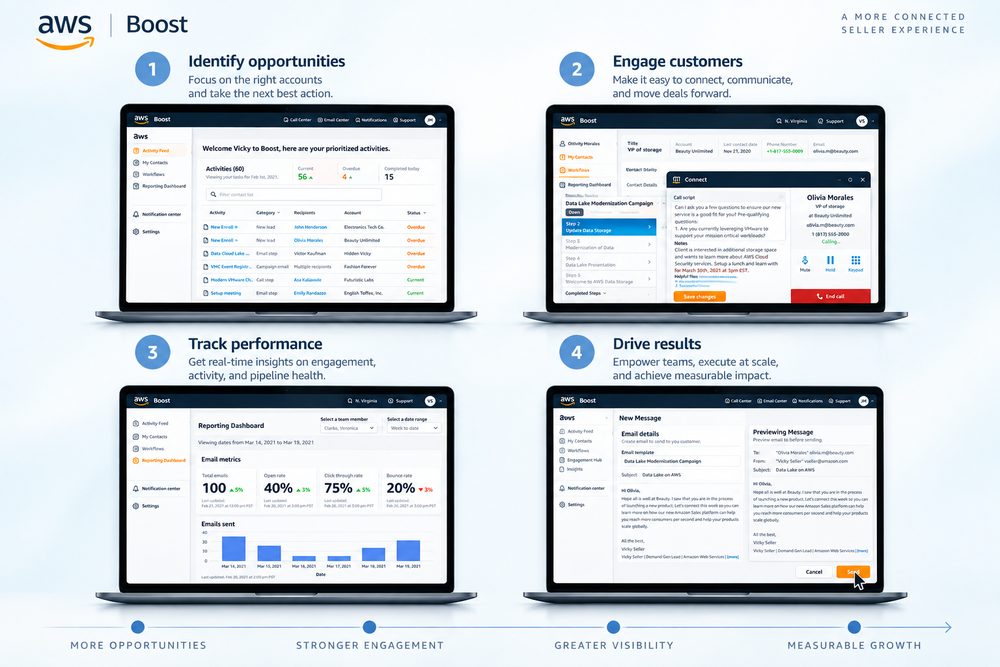
We consolidated five to six tools into one connected workspace: contacts and calling, sales play planning, execution, and reporting in a single place.
Design was built around the real seller workflow rather than forcing a new habit, with reusable components so the platform could scale.
Impact
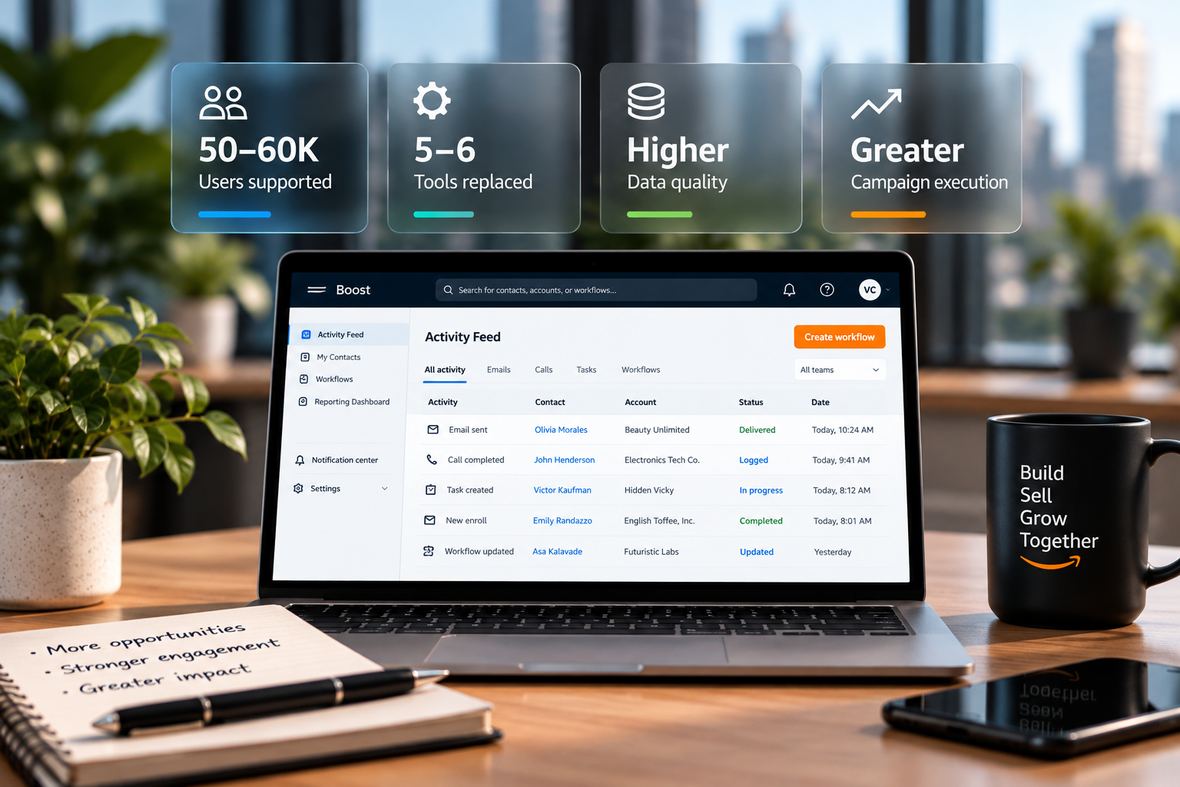
The platform grew to serve tens of thousands of users, and cut context-switching by an estimated 50 to 70 percent, saving roughly 30 to 90 minutes a day per seller.
Consolidating tools also reduced license costs and improved data quality across the org.
What I learned
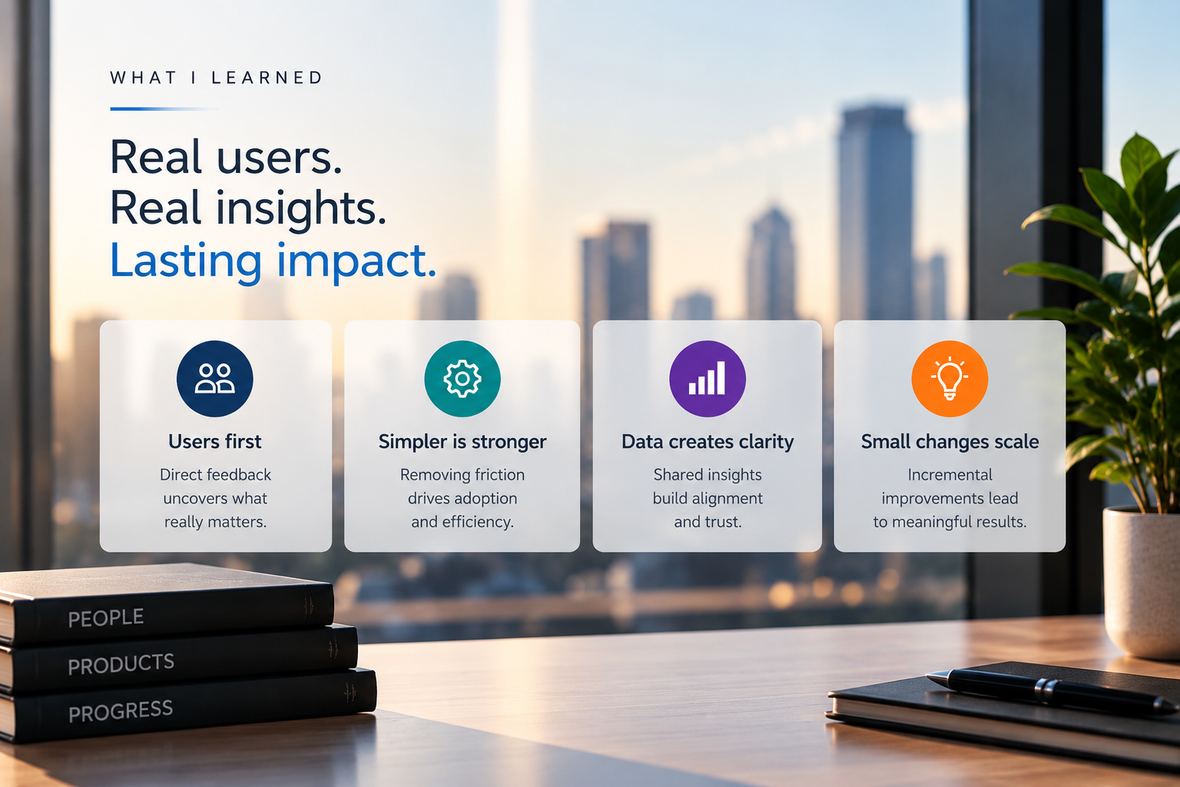
When you replace many tools with one, adoption lives or dies on respecting the existing workflow. Research up front is what made the consolidation land.
Process
The path Boost actually took, from an initial workflow concept to one connected platform.
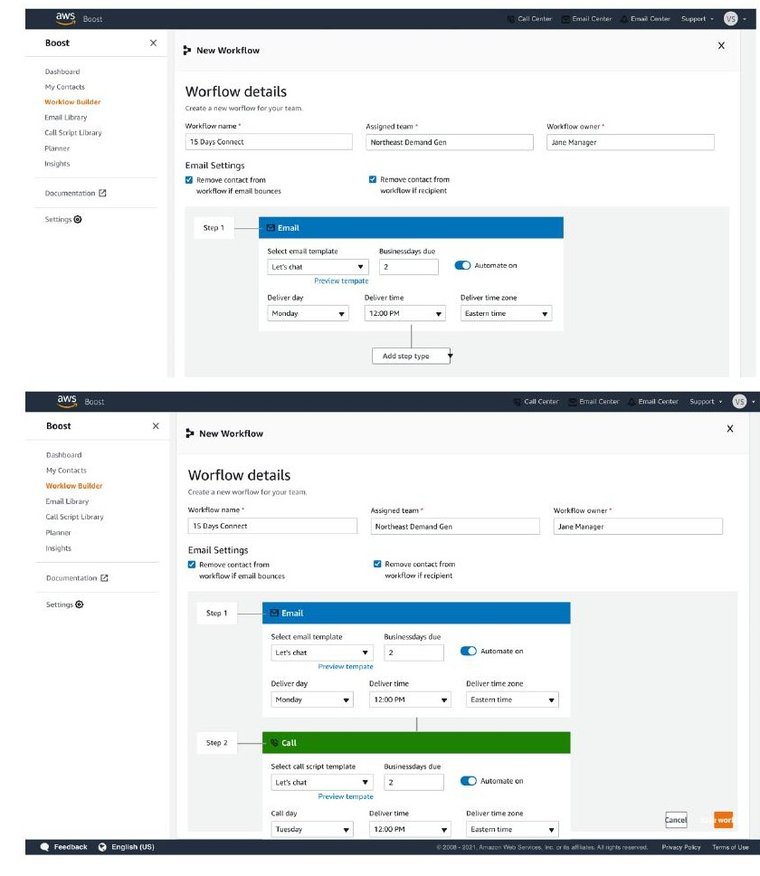
Initial concept
The initial workflow builder met the core requirements, Program Managers could build sales workflows. But through feedback I saw the underlying UI model would not scale as workflows grew, so I redesigned it with new states that could grow with the product.
Final
One platform, one source of truth. Prioritization, outreach, and performance in one place: a prioritized activity feed, sales-rep analytics, and a dial tool that replaced RingCentral. Sellers stopped switching between tools.
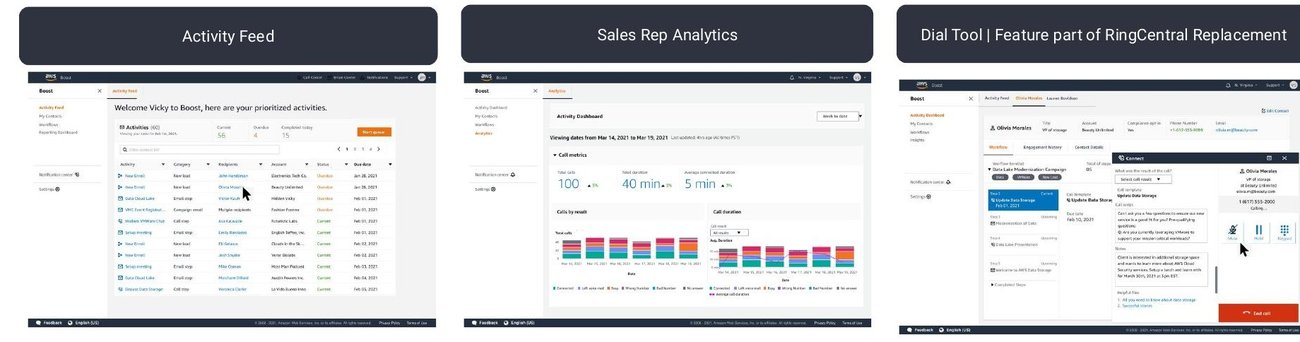
A curated selection. The full Boost work spanned several large Figma files, so this is a focused slice of the design.
One workspace, not five. Research showed the real cost was context-switching, so I consolidated tools rather than adding features.
Design around live constraints. Salesforce integration kept changing, so I designed around the real constraints rather than an ideal state.
“Technology should make life more human, not more complicated.”— Veronica Clarke
Let’s build what’s next
Get in touch