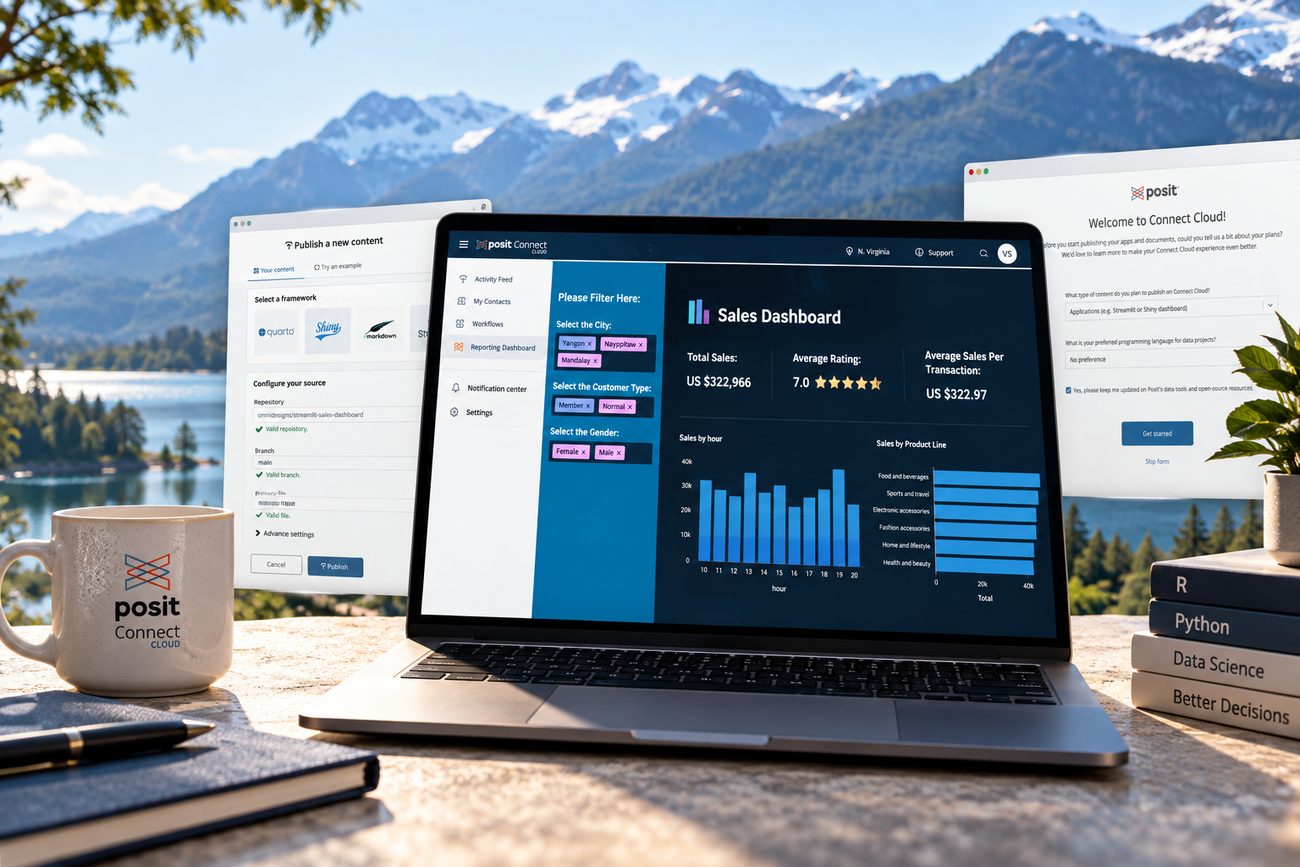
Data Science Platform
Connect Cloud
Taking a decade-old enterprise product into the cloud.
Redesigning the experience, establishing a design system, and creating a more accessible, secure, and scalable platform for the data science community.
The challenge
The existing on-prem Connect product had been around for 10+ years, was expensive, and lacked a modern user experience. There was no in-house UX, and the company needed a cloud offering to stay competitive.
As the first in-house UX designer on the product, I had to build both the experience and the design foundation at the same time.
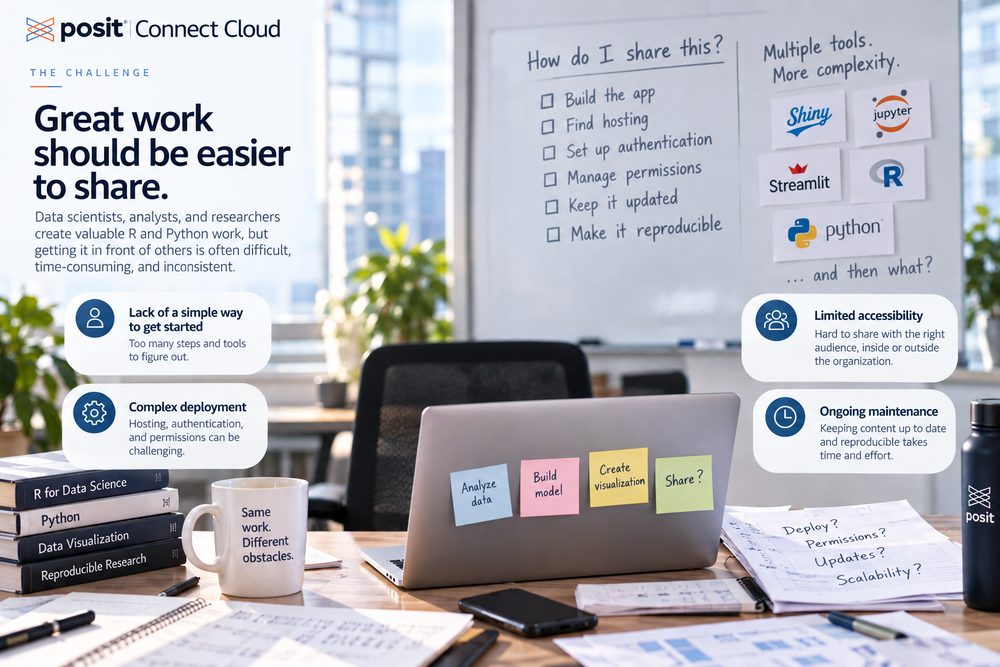
We made it easier for data scientists to build, share, and scale their work.
Research
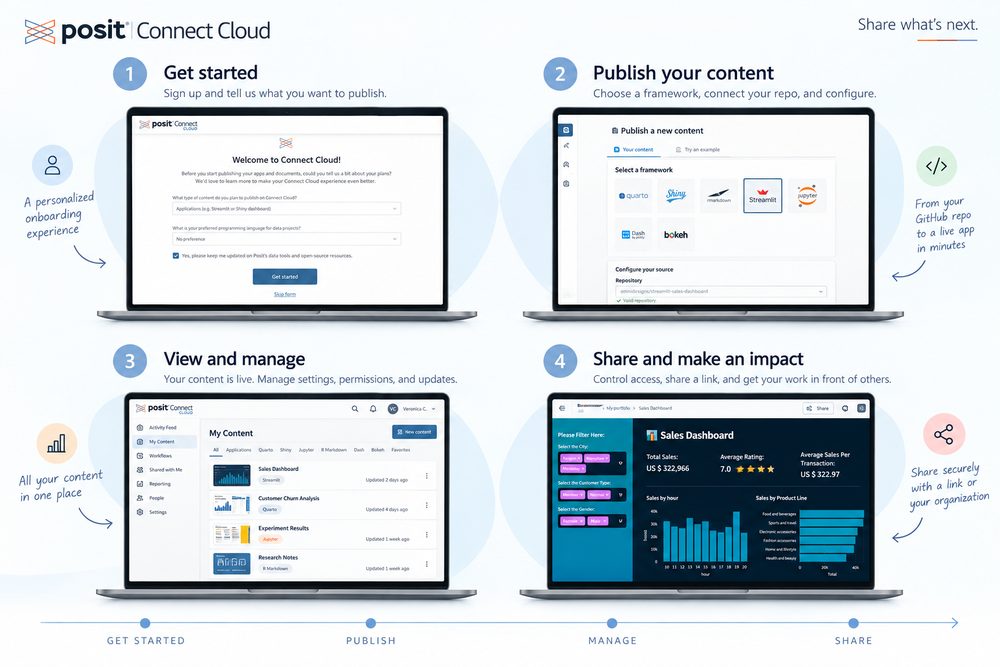
I studied how data scientists publish, manage, and share their work, then used those flows to prioritize what the cloud product needed first.

Solution
I designed across the core journeys: the publish flow, content management, OAuth and integrations, plan selection, and content detail, so the product held together end to end.
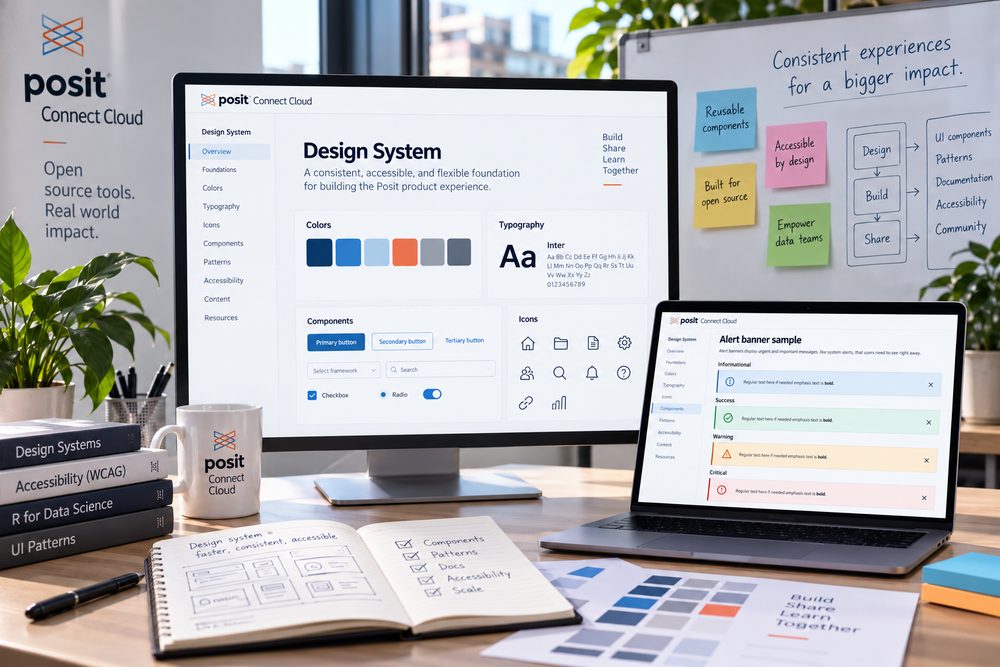
Design system
I established a design system focused on accessibility, consistency, and scalability, giving the product a foundation it could grow on without fracturing.
Impact
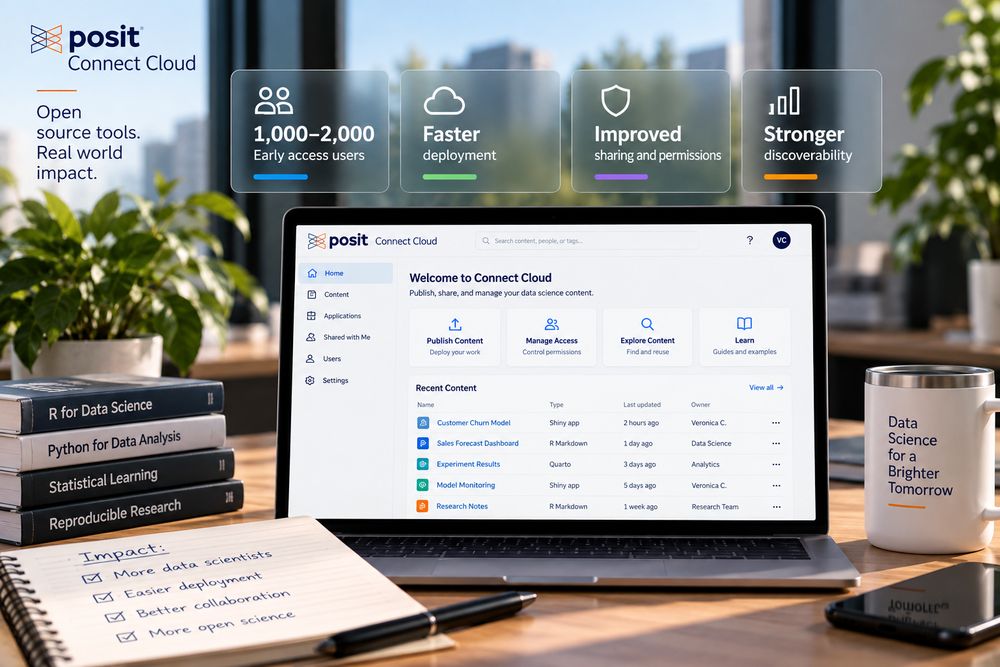
Connect Cloud brought a decade-old enterprise product into a modern, accessible, cloud-based experience, and opened it to a far wider data science community.
Process
The path Connect Cloud's onboarding took, from a constrained modal to a scalable, full-page flow.
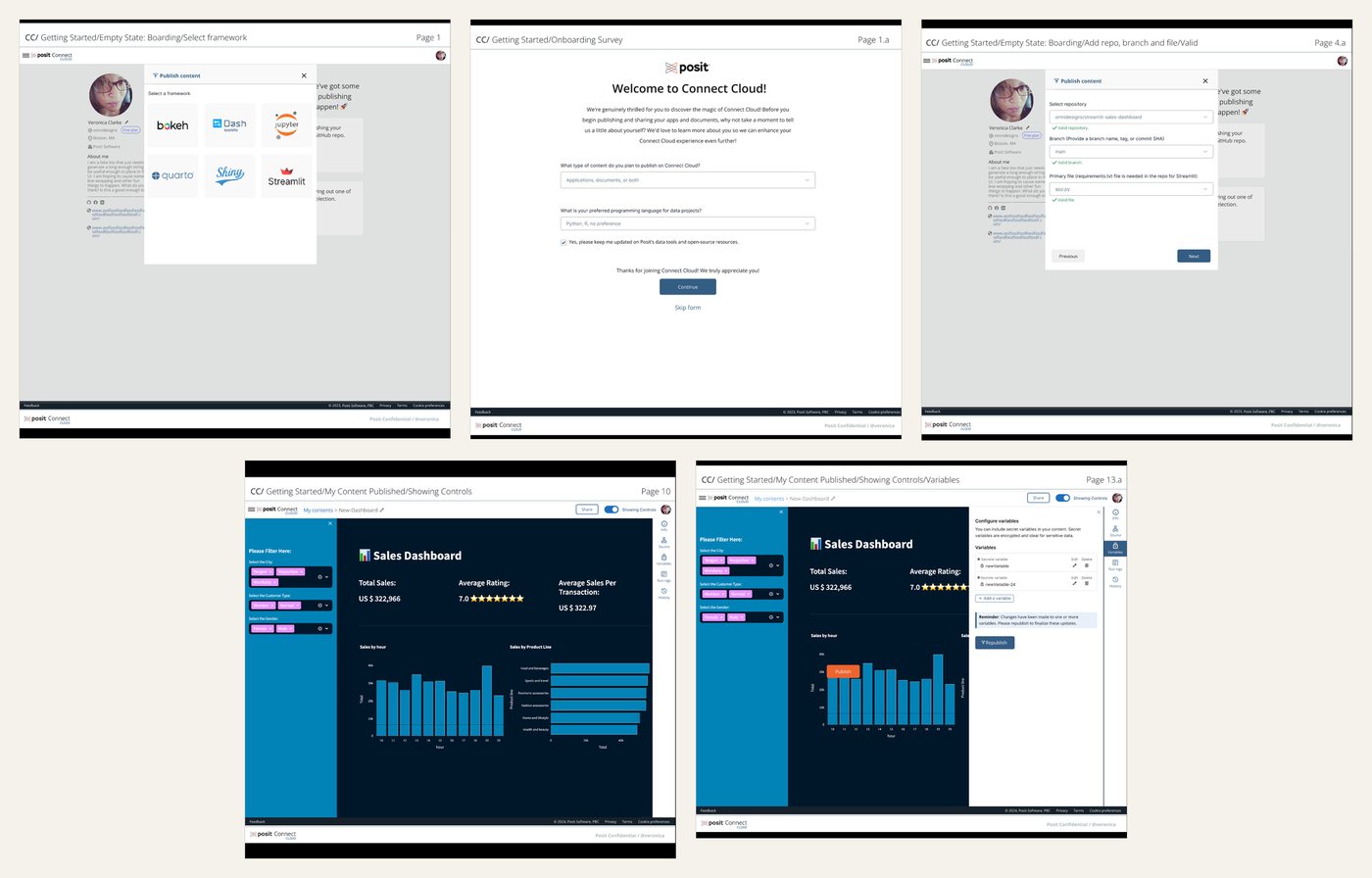
Initial concept
Before I joined, onboarding lived in a modal window that wouldn't let the product grow long-term. I stepped in and worked with the dev team on a working-backwards plan, bringing the concept from a modal window to a full-page, dynamic input form that could scale. These early concept screens cover framework selection, the getting-started survey, publishing, and content controls.
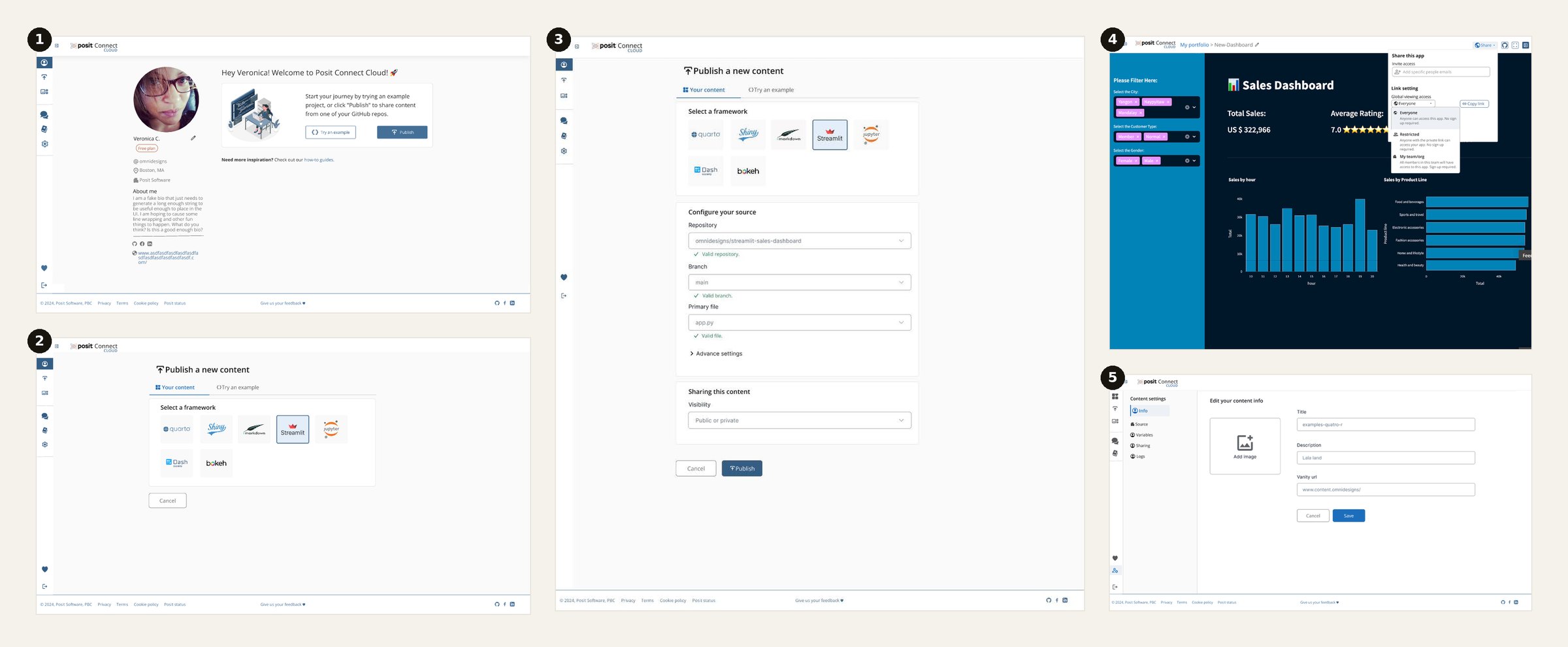
Final
The final experience came to life through usability sessions, user interviews, surveys, and competitive analysis. New users land on a personal portfolio page, choose a framework, point to a GitHub repository, branch, and primary file with inline validation, then publish and decide who can see their work. Content settings let them update the title, description, and vanity URL. I wrote all of the UX writing and product content across these flows.
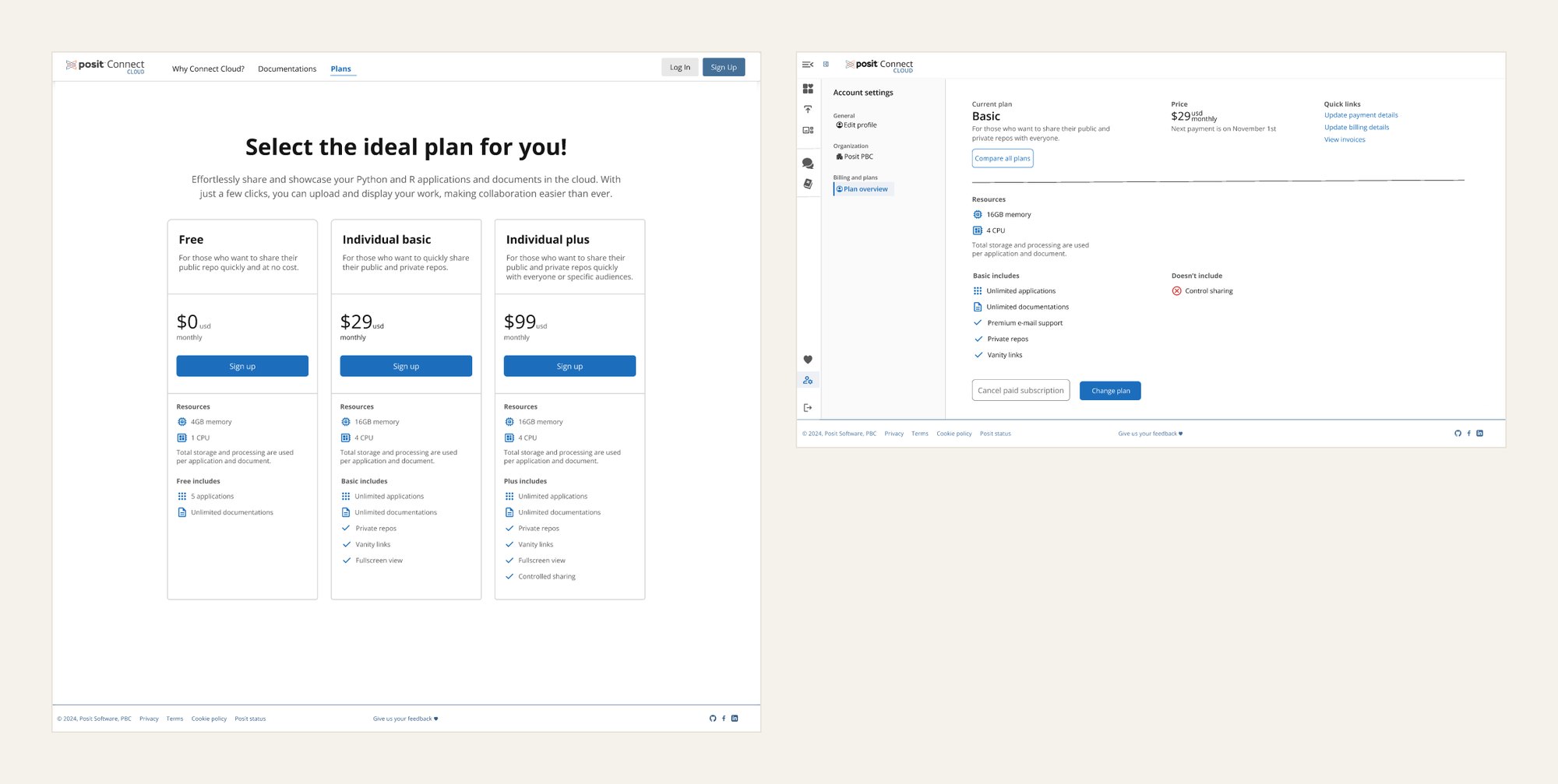
Pricing and plans
I designed the pricing experience and learned Stripe to build it. The public pricing page compares Free, Individual basic, and Individual plus side by side, and account settings show the current plan, what it includes, and billing actions in one place.
The live product. It has continued to evolve since my time on the team.
Full page over modal. A modal couldn't grow with the product, so onboarding moved to a scalable, full-page flow.
Work backwards with engineering. I partnered with the dev team on a working-backwards plan to get there.
Own the content. I wrote all of the UX writing and product content so the voice stayed clear and consistent from sign-up to billing.
Learn the tool. I learned Stripe so the pricing and plan flows I designed matched how billing actually works.
“Technology should make life more human, not more complicated.”— Veronica Clarke
Let’s build what’s next
Get in touch